We share with you a timely and insightful letter on prayer and hope from the Abbot General of our Order, Dom Bernardus Peeters ocso…
Author Archives: Bethlehem Abbey
The Rich (Young?) Man – A Vocation Conversation with Jesus
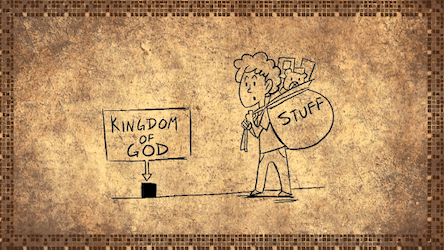
One of the most frequently cited vocation model parables is the encounter which the Gospels give us between Jesus and a promising candidate. I say “promising candidate” because the man who runs up to Jesus and asks what might very well be…
The Blessed Virgin at the Foot of the Cross

Engaging with, surrendering to, and understanding, if we can, the mystery of suffering in our lives, and in the lives of others, has always provided a challenge, and even a challenge too far, for the compassionate human being. Perhaps it is the experience which most speaks to us about our frail humanity, in all its myriad dimensions, from the sheer and immediately physical to the often and tragically hidden aspects of our interior life…
Holy Mary, Mother of God

Continuing our reflections on the collection of votive Masses dedicated to the example of Our Lady, we turn to her celebration as Mother of God. The Mass begins by reminding us that it is the Father’s will that his Son take flesh in Mary’s womb, and that Mary welcomes this mystery of our redemption. St Bernard emphasises the union of Mary’s virginity and humility: Had Mary not been humble, the Holy Spirit would not have rested upon her. Had he not rested upon her, she would not have become pregnant. The moment of Incarnation holds within it the promise and presence of saving Word and Bread of Life…
The Visitation of the Blessed Virgin Mary – Old and New Unite

In the entries which we will offer over the next while, we will begin to survey the rich texts composed for the votive Masses of the Blessed Virgin Mary. In this post we will give special attention to some of the splendid prayers for the Visitation. Although we already have the feast day – 31stContinue reading “The Visitation of the Blessed Virgin Mary – Old and New Unite”
Lectio Divina – Being fed by the Word!
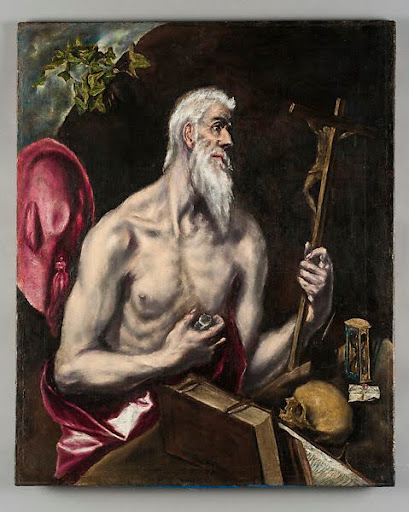
Saint Jerome emphasizes the importance of engaging deeply with Sacred Scripture, which, for him, is the body of Christ. His thoughts prompt consideration of the prayer-art of lectio divina, the spiritual reading of scripture. As we approach lectio divina, we should remember St Paul’s statement about faith coming from what is heard, emphasizing that our faith is justified by grace restoring our pure relationship with God. This encounter with the Word encourages spiritual growth and refines our faith.
Lectio Divina and God’s Self Revelation

Lectio divina is, in a sense, always theophany – it is always the divine self-revelation, which is of course what Christ is – who sees Christ, and we could say, hears him and tastes him, sees and hears and tastes the Father. This is why the events of the Burning Bush in Exodus 3 and the Synoptic Gospel accounts of the Transfiguration become so important for the person who would make lectio divina their way of prayer. God’s self-showing in both is about self-communication and about redemption…
Mary, Liturgy in Action
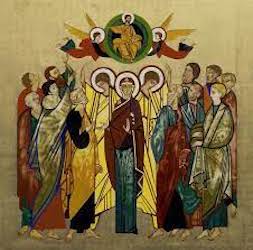
As we continue to explore Mary’s role in the prayer and worship of the People of God we are faced with an inevitable question – what is liturgy? What function does it have and how does it express the essential attitude of the People of God? Why, at the heart of all, must the Christian be a liturgical being, and the being of the Church an unending liturgical action?
Lectio Divina – Space for the Prophetic

Sometimes we make the mistake of imagining that lectio divina should be the preserve or practice of some sort of esoteric and (ultimately false) mysticism. The mystic is, paradoxically, rooted in the concrete and material experience of his or her whole age; otherwise, they have no means of relating, in the first instance, to their fellow human beings. This is the very point of the incarnation of the Word, and the subject of heresies which, although clearly identified as belonging to the early centuries of the Church’s history, are by no means absent from our experience, language and even preaching today: the hypostatic union expresses the truth that Jesus Christ is both fully God and fully man, precisely that he relates in the fullest way to the divine and the human…
Mary, Teacher in the Liturgy

“We fly to your protection, Holy Mother of God. Do not despise the petitions we offer you in our need, but deliver us from all dangers, O glorious and blessed Virgin”. This short and easily memorised prayer – the Sub Tuum Praesidium, to give it its Latin title – is the earliest known prayer directed specifically to the Blessed Virgin. First found in third century texts, it places before us the incontrovertible fact that early Christians must have been in the habit of weaving Mary into their prayer, perhaps both private and common…
 Our Lady of Bethlehem Abbey, Portglenone