
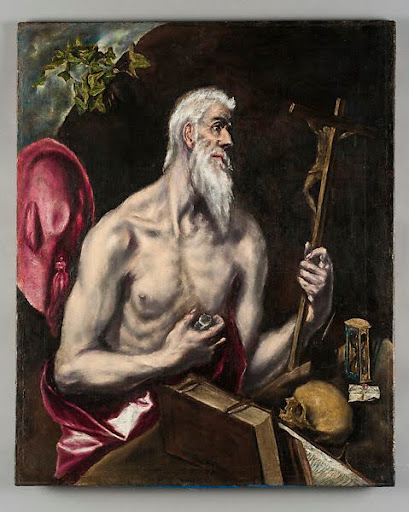
Saint Jerome emphasizes the importance of engaging deeply with Sacred Scripture, which, for him, is the body of Christ. His thoughts prompt consideration of the prayer-art of lectio divina, the spiritual reading of scripture. As we approach lectio divina, we should remember St Paul’s statement about faith coming from what is heard, emphasizing that our faith is justified by grace restoring our pure relationship with God. This encounter with the Word encourages spiritual growth and refines our faith.
Category Archives: Lectio Divina
Lectio Divina and God’s Self Revelation

Lectio divina is, in a sense, always theophany – it is always the divine self-revelation, which is of course what Christ is – who sees Christ, and we could say, hears him and tastes him, sees and hears and tastes the Father. This is why the events of the Burning Bush in Exodus 3 and the Synoptic Gospel accounts of the Transfiguration become so important for the person who would make lectio divina their way of prayer. God’s self-showing in both is about self-communication and about redemption…
Lectio Divina – Space for the Prophetic

Sometimes we make the mistake of imagining that lectio divina should be the preserve or practice of some sort of esoteric and (ultimately false) mysticism. The mystic is, paradoxically, rooted in the concrete and material experience of his or her whole age; otherwise, they have no means of relating, in the first instance, to their fellow human beings. This is the very point of the incarnation of the Word, and the subject of heresies which, although clearly identified as belonging to the early centuries of the Church’s history, are by no means absent from our experience, language and even preaching today: the hypostatic union expresses the truth that Jesus Christ is both fully God and fully man, precisely that he relates in the fullest way to the divine and the human…
Faith and Lectio Divina – the Word takes Flesh
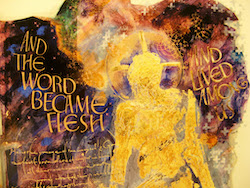
If faith and lectio divina are to mean anything together then it must be that lectio divina has the distinguishing characteristic of being incarnational. The Word has to take flesh again in us, and this is what we must aspire to when we approach Sacred Scripture – the whole of Scripture hinges and pivots around the Christ-event, either in preparation, or in actualisation, or in memorization, that’s to say, how it lives on in the memories of those who have experienced it (we might look at the First Letter of St John should we need any convincing of this in its effects). And that memorization, the calling to mind which is memorial in its sacred and liturgical sense, and acknowledging our Jewish roots when we speak like this, is also a matter of faith…
Faith and Lectio Divina

What is it to speak about a faith context for lectio divina? In the first place, what is lectio divina? This reverenced way of prayer in the Church centres us on the encounter with Jesus Christ in the word of Sacred Scripture. Lectio divina – literally, sacred or divine reading – is the prayerful, slowContinue reading “Faith and Lectio Divina”
Mark 9:14-29 – At the Bottom of the Mountain

From the ecstatic peace of the mountain we descend, with Christ and the three disciples, into the usual melée which is the backdrop to life on the ground. For all of us it can be so appealing to want to remain in the thickness of the cloud, removed, as it were, from one reality to be able to experience real reality in the undiluted presence of God.
Mark 9:2-13 – Transfiguration
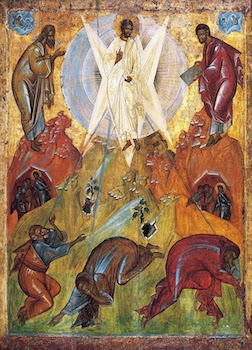
In this moment of unparalleled encounter we too, like Elijah and Moses, are invited to be friends with God, speaking with him face to face.
Mark 8:34-38 – A Lectio for Lent
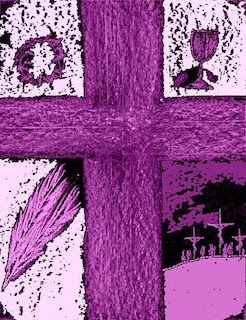
It seems that our lectio of Mark’s Gospel has happily reached a point which perfectly mirrors this moment in the liturgical calendar: the conditions of discipleship are placed into the context of our common and personal Lenten journey!
Mark 8:31-33 – Great Expectations

With these few verses in our lectio we reach the real point of Mark’s Gospel – that the Christ has come to be revealed in his Passion. The verses which have preceded these, of course, form a single unit and each portion relies upon the other for its full meaning: the faith realisation about Jesus’ true identity and then what that identity implies.
Mark 8:27-33 – Who do you say I Am?

With this lectio divina we reach a turning point in the Gospel, and with it, perhaps, a turning point for ourselves. There is no doubt that we cannot avoid being drawn into this scene as participant, both hearing Jesus’ questions addressed directly to us, and feeling his expectation as he waits for each of us to answer. He asks a profoundly disturbing question, which divides itself into two parts – the first general, by way of softening us up, as it were; the second particular, personal, and pointed.
 Our Lady of Bethlehem Abbey, Portglenone